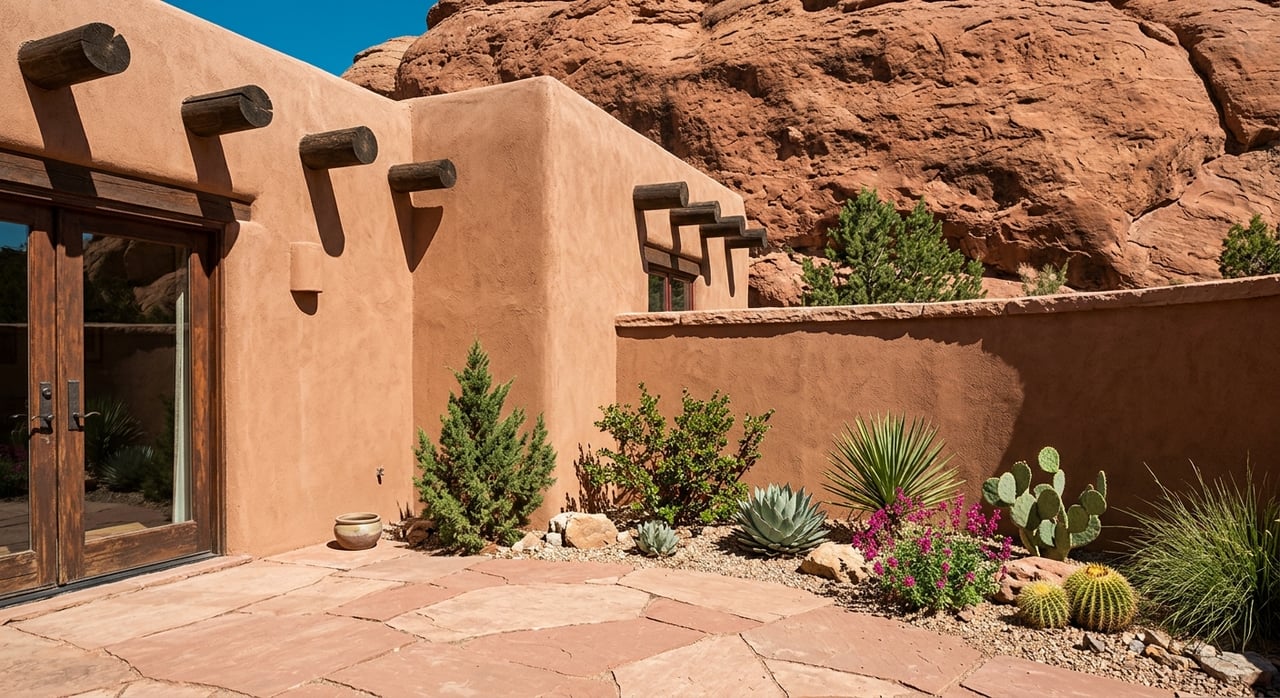
If you are dreaming about a second home in red rock country, the biggest question is not just whether to buy in Sedona. It is where in Sedona and the Verde Valley your lifestyle, budget, and long-term plans line up best. Whether you want a lock-and-leave retreat, a seasonal getaway, or a property with rental potential, understanding how each area differs can help you buy with more confidence. Let’s dive in.
Why second-home buyers look here
Sedona and the Verde Valley offer a mix of scenery, recreation, and year-round usability that makes them appealing for part-time owners. Sedona sits about an hour and a half north of Phoenix at roughly 4,500 feet and has four mild seasons, which makes it practical for weekend trips and longer seasonal stays. According to the City of Sedona, the visitor and seasonal population often doubles the year-round population.
That strong visitor presence helps explain why Sedona tends to lead the region in second-home demand. The Sedona Red Rock Ranger District includes 400 miles of trails, supporting hiking, horseback riding, mountain biking, backpacking, and seasonal motorized trail use. If your goal is a lifestyle purchase built around views and outdoor access, Sedona naturally stands out.
Sedona vs. Verde Valley prices
Price is often the first reality check in a second-home search. In 2025, Yavapai County reported a median single-family home sales price of $1,080,000 for the Sedona/Village of Oak Creek area, compared with $428,500 for the Verde Valley overall, according to the Yavapai County Assessor’s Office.
A City of Sedona housing analysis also estimated median home values at $769,824 in Sedona, $707,195 in the Village of Oak Creek, $573,148 in Jerome, $520,423 in Cornville, $429,394 in Clarkdale, $395,671 in Cottonwood, and $355,951 in Camp Verde. Those numbers show a clear pattern: you usually pay a premium for the classic Sedona setting, while nearby communities can offer a lower entry point.
Sedona: the premium view market
For many buyers, Sedona is the picture they have in mind from the start. It is the most view-driven and trail-centered option in the area, with a tourism-heavy economy and the strongest connection to the red rock experience. If your priority is the classic Sedona lifestyle, this is often the benchmark market.
Sedona may also be the strongest fit if you want the most established short-term rental demand. The city’s 2026 housing analysis says short-term rentals grew to 18.1% of Sedona’s housing stock in 2025, up from 9.8% in 2020, and estimated average gross rent for a 2-bedroom home at $3,047, above county and state averages, according to the City of Sedona housing analysis.
The tradeoff is cost and complexity. Sedona homes often command higher prices, and many properties are older. The same housing analysis notes that only about 21% of homes were built since 2000, which means maintenance planning, renovation costs, and property condition deserve close attention.
Village of Oak Creek: close to Sedona
If you want to stay near Sedona but are looking for an alternative setting, the Village of Oak Creek is often the first place to consider. VOCA describes it as an unincorporated community about 7 miles south of Sedona with an 18-hole golf course, pickleball and tennis, a playground, and trail access, according to the Village of Oak Creek Association.
For second-home buyers, the appeal is easy to understand. You are still close to Sedona’s scenery and recreation, but you may find different pricing, neighborhood layouts, and ownership structures. The Village of Oak Creek can be a smart middle ground for buyers who want Sedona-area access without being in the city itself.
Because it is unincorporated, due diligence matters. You should confirm whether county rules, HOA rules, or parcel-specific restrictions apply to the property you are considering.
Cottonwood and Clarkdale: more services, lower entry
If your second home is meant to be practical as well as scenic, Cottonwood and Clarkdale deserve a close look. These communities usually offer lower price points than Sedona and can work well for buyers who want a service-rich base for regular stays.
Cottonwood is the Verde Valley’s commercial hub. The city highlights amenities including public transportation, a recreation center, a large library, parks, an airport and industrial airpark, medical facilities, and a historic district, according to the City of Cottonwood. That makes Cottonwood appealing if convenience and access to day-to-day services matter to you.
Clarkdale offers a different kind of appeal. The town describes itself as Arizona’s first planned community and highlights its historic downtown, the Verde Canyon Railroad, the Arizona Copper Art Museum, the Verde River, and access to Tuzigoot and Sycamore Canyon. If you want character and history while staying closer to Verde Valley price points, Clarkdale may be worth exploring.
Cornville, Camp Verde, and Jerome options
Some second-home buyers are not chasing the most famous address. They want a quieter base, a more rural setting, or a home with a different kind of personality. That is where Cornville, Camp Verde, and Jerome come into the picture.
Camp Verde tends to be the value and access play. The town describes itself as a riverfront, outdoor-focused destination and notes its Dark Sky Community designation, along with regional access to Phoenix, Flagstaff, Prescott, and Payson. If you want a central location and a lower entry price, Camp Verde may offer practical value.
Cornville is often the quieter rural choice. The community association emphasizes preserving rural lifestyles and neighborhood character, and the Verde Valley Wine Trail includes wineries and tasting rooms in Cornville, Jerome, Sedona, Clarkdale, and Cottonwood. If your idea of a second home leans more toward space, quiet, and wine-country surroundings, Cornville can be a strong match.
Jerome is the niche option for buyers drawn to history and arts. The town is known for its historic attractions and creative character, but a recent appraisal also noted that many sites are sloped, which can limit yards, patios, and parking. In Jerome, charm can be a major selling point, but practicality should be checked carefully.
Compare lifestyle and use goals
Before you narrow your search, it helps to define how you will actually use the property. A second home that works beautifully for long weekends may not be the best fit for seasonal stays, guests, or rental use.
Here is a simple way to think about the tradeoffs:
| Area | Best Fit For | Main Tradeoff |
|---|---|---|
| Sedona | Views, trail access, classic red rock experience, stronger rental demand | Higher prices and more regulation |
| Village of Oak Creek | Sedona proximity with community amenities | Rule verification varies by parcel |
| Cottonwood | Services, convenience, lower entry price | Less of the classic Sedona setting |
| Clarkdale | Historic feel and Verde Valley access | Smaller niche market |
| Cornville | Rural setting and quieter wine-country feel | Fewer urban-style services nearby |
| Camp Verde | Budget-conscious buyers and regional access | Less tourism-driven appeal |
| Jerome | Historic character and arts atmosphere | Sloped lots, parking, and usability issues |
HOA and property rules matter
With second homes, ownership rules can affect your experience almost as much as the home itself. HOA review is especially important in this region because some communities have formal associations and shared amenities, while others are shaped more by county rules or rural-use expectations.
A practical review should include:
- CC&Rs
- HOA dues
- Rental caps
- Parking rules
- Exterior modification rules
- Whether a guesthouse or casita is treated as a separate unit
This step is especially important in places like the Village of Oak Creek or Cornville, where community structure and property restrictions can differ from parcel to parcel. A home that looks perfect online may come with use limitations that change the math for seasonal living or rental plans.
Check lot usability and maintenance
Second-home buyers often focus first on views, but everyday usability matters just as much. In parts of Sedona and Jerome, topography can limit driveway access, guest parking, outdoor space, and ease of maintenance.
The City of Sedona housing analysis points to older and more topographically constrained housing patterns in some areas, and Jerome appraisals note that sloped sites can limit usable outdoor space and parking. For a seasonal owner, these are not minor details. If you are not living in the property full time, ease of access and upkeep can shape your ownership experience.
Know the rental rules first
If rental income is part of your plan, start with regulations before you fall in love with a property. Sedona has the area’s strongest short-term rental upside, but it also has a defined local process.
The city requires a state TPT license before a local short-term rental permit, requires each advertised unit to have its own permit, charges late fees for overdue renewals, and prohibits short-term rentals from hosting special events, according to the City of Sedona housing analysis. That means compliance is a real part of the ownership equation.
Outside Sedona city limits, the path is different. Yavapai County allows short-term rentals only for permitted habitable structures and does not allow events such as weddings or parties. If you are considering the Village of Oak Creek, Cornville, or another unincorporated area, parcel-level verification is still essential.
How to choose the right fit
The best second home in Sedona and the Verde Valley is the one that fits your goals, not just the one with the most dramatic photos. If you want the full red rock experience and the strongest tourism-driven demand, Sedona usually leads the list. If you want lower entry prices, more services, or a quieter setting, the surrounding Verde Valley communities may offer a better match.
A smart search usually starts with three questions:
- How will you use the home most of the year?
- What level of maintenance and rule complexity are you comfortable with?
- Is your top priority scenery, convenience, rental potential, or price?
Once those answers are clear, the map gets much easier to read.
If you are weighing Sedona against Cottonwood, Clarkdale, Cornville, Camp Verde, or the Village of Oak Creek, working with a local team can help you compare neighborhoods, property rules, and real-world ownership costs before you commit. The team at Adobe Group Realty brings practical Verde Valley market knowledge and can help you find a second home that fits how you actually want to live and own.
FAQs
What makes Sedona a strong second-home market?
- Sedona combines red rock views, 400 miles of nearby trails, strong visitor demand, and a more established short-term rental market than surrounding Verde Valley communities.
How does Village of Oak Creek compare to Sedona for second-home buyers?
- Village of Oak Creek offers close access to Sedona, community amenities, and a Sedona-adjacent lifestyle, but buyers should carefully verify county rules, HOA rules, and parcel-specific restrictions.
Which Verde Valley towns offer lower prices than Sedona?
- Based on the research report, Cottonwood, Clarkdale, Camp Verde, Cornville, and Jerome all have lower estimated median home values than Sedona and Village of Oak Creek.
What should you review before buying a second home in Cornville or Village of Oak Creek?
- You should review CC&Rs, HOA dues, rental caps, parking rules, exterior modification rules, and whether guesthouses or casitas are treated as separate units.
Are short-term rentals allowed outside Sedona city limits?
- Yes, in some cases, but Yavapai County allows short-term rentals only for permitted habitable structures and does not allow events such as weddings or parties, so parcel-level verification is important.
Why do lot slope and parking matter in Sedona and Jerome?
- In more topographically constrained areas, sloped lots can reduce usable yard space, affect driveway access, and limit guest parking, which can be especially important for seasonal owners.